All photographs / images are provided for guidance purposes only.
Adriano Correia de Oliveira
Intervention Music
Biography
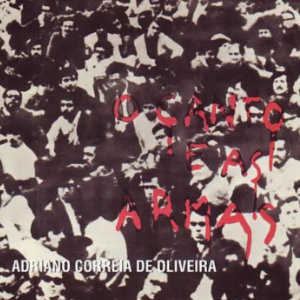
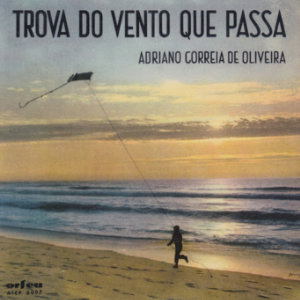
biography Adriano Maria Correia Gomes de Oliveira was born in Porto on April 9, 1942 and died in Avintes on October 16, 1982. He was a Portuguese musician, interpreter of the Coimbra song and intervention singer. Son of Joaquim Gomes de Oliveira and Laura Correia, Adriano moved to Avintes when he was still a few months old. Raised in a deeply Catholic family, Adriano Correia de Oliveira's childhood was marked by an environment that he would later describe as «markedly rural, among vines, domestic dogs and beautiful tree-lined avenues overlooking the Douro River». After completing his secondary studies at Liceu Alexandre Herculano, in Porto, Adriano Correia de Oliveira enrolled at the Faculty of Law of the University of Coimbra in 1959. During the years spent in Coimbra, he had an intense participation in the cultural and sporting environment linked to the academy. He lived in the Royal Republic of Ras-Teparta, was a soloist in Orfeon Académico, member of the University Group of Dances and Songs, actor in CITAC, guitarist in Conjunto Ligeiro da Tuna Académica and volleyball player in Briosa. In the 1960s he joined the Portuguese Communist Party, becoming involved in the academic strikes of 62 against Salazarism. That year he was a candidate for the Coimbra Academic Association on a list supported by MUD. In 1963 he released his first EP, Fados de Coimbra. Accompanied by António Portugal and Rui Pato, the album contained the interpretation of "Trova do vento que passa", a poem by Manuel Alegre, which would become a kind of anthem of students' resistance to the dictatorship. In 1967 he recorded the album Adriano Correia de Oliveira which, among other songs, included "Canção com Virgínias". In 1966 he married Maria Matilde de Lemos de Figueiredo Leite, daughter of the doctor António Manuel Vieira de Figueiredo Leite and his wife Maria Margarida de Seixas Nogueira de Lemos. The couple who would later separate had two children: Isabel born in 1967 and José Manuel born in 1971. Called up to do Military Service in 1967 Adriano Correia de Oliveira left one discipline and was unable to graduate in Law. Still in 1969, the album "O Canto e as Armas" was released, again revealing several poems by Manuel Alegre. For his work he received the Pozal Domingues Prize in the same year. In 1970, he released "Cantaremos" and in 1971 he released "Gente d’aqui e de agora", the latter with the first arrangement as conductor by José Calvário and composition by José Niza. In 1970 he graduated from the army and decided to leave Coimbra for Lisbon where he worked at the FIL Press Office — Feira Industrial de Lisboa until 1974. With the Carnation Revolution Adriano Correia de Oliveira was among the founders of Cooperativa Cantabril. He was involved in organizing hundreds of PCP initiatives across the country in which he played. He was a member of the Organizing Committee of the Festa do Avante! of the PCP since the first edition, to which he would belong until his death.