All photographs / images are provided for guidance purposes only.
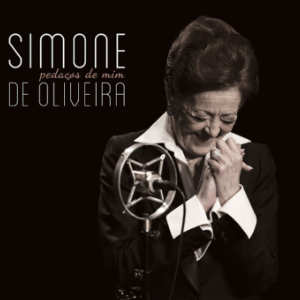
Simone de Oliveira
Pop
Biography
biography Simone de Macedo e Oliveira, better known as Simone de Oliveira, is a Portuguese singer, presenter and actress born in Lisbon, Portugal, on February 11, 1938. Her mother was Portuguese and had African roots in São Tomé and Príncipe (then a Portuguese territory) and her father was Belgian. Simone began singing in high school and began her career in the late 1950s. Simone is a breast cancer survivor and has had the disease twice. Simone represented Portugal in the 1965 Eurovision Song Contest with “Sol de Inverno” and became quite famous in 1969 with the song “Desfolhada Portuguesa”, with lyrics by José Carlos Ary dos Santos and music by Nuno Nazareth Fernandes. This song became a huge success in Portugal, having innovative lyrics during the time of António de Oliveira Salazar's dictatorship. He represented Portugal in the 1969 Eurovision Song Contest in Madrid. Despite its popularity in Portugal, it was not successful at Eurovision, receiving only 4 votes. Eleven years later, she was again selected by RTP to represent Portugal in the ninth edition of the OTI Festival (the Latin American equivalent of the Eurovision Song Contest). Simone performed the song “A tua espera” which came in 14th place with 9 points. He appeared in several plays, more than 10 films and 23 soap operas. Simone de Oliveira is also known for her personal life, she is the daughter of Guy de Macedo e Oliveira, who died in Lisbon in 1970, and Maria do Carmo Tavares Lopes da Silva, born in Lisbon and died in Lisbon in 1968. She grew up in Lisbon with her sister Olga Maria de Macedo de Oliveira. His father was the director of a grinding factory in Olivais and his mother was an employee of the Post Office, Telegraph and Telephone (CTT). He attended Liceu D. Filipa de Lencastre. She got married at 19 and was a victim of domestic violence, suffering attacks from her husband, with whom she lived for just three months. Simone won several awards throughout her career, including: - 1st place at the III Festival da Canção Portuguesa (1961), - Prize da Imprensa (1963; 1964), - 1st place at the II Grande Prêmio TV da Canção Portuguesa (1965), - Rainha da Rádio (1965), - 1st place at the VI Grande Prêmio TV da Canção Portuguesa (1969), - Interpretation Prize at X Grand Prize TV da Canção Portuguesa (1973), - 3rd place and Interpretation Prize at the 1st New Song Festival in Lisbon (1979), - Interpretation Prize at the IX OTI Song Festival, in Buenos Aires, Argentina (1980), - Golden Globe for Merit and Excellence (2011), - Medal of Municipal Merit Grade Gold of Lisbon (2008); - Medal of Municipal Merit Grade Gold Vila Nova de Gaia (2021).